


How to Scale an E-Commerce Business Without Sacrificing Profit Margins
24/08/2026
7 Minute read


How to Scale an E-Commerce Business Without Sacrificing Profit Margins
Every online brand wants to know how to scale an E-Commerce business fast. However, quick success often leads to a “Growth Trap.” This happens when the work behind the scenes becomes too complicated for your team to handle, hurting the customer experience and lowering your profits.
To build a lasting brand, you need to make your backend operations more efficient. Here is a simple plan for avoiding the growth trap by using dedicated remote teams to keep your business profitable.
Why E-Commerce Growth Challenges Shrink Retail Profit Margins
As online sales continue to grow, businesses need stronger systems and more support behind the scenes. In the UK, internet sales represented 27.4% of total retail sales in 2025. Similarly, Australian shoppers spent a record A$82.6 billion online in 2025. These growing volumes place significant pressure on backend operations.
When an online store grows quickly, the natural response is to increase advertising and maintain momentum. More sales, however, place significant pressure on backend operations.
Higher Ad Costs ➔ Sales Jump ➔ Admin Work Piles Up ➔ Profits Drop Due to Delays
Getting an order is fast, but packing, shipping, and answering questions takes time. Without a flexible team to help with the extra work, these problems hurt your profits in three ways:
- Delayed customer replies can contribute to order cancellations, chargebacks, and poor reviews.
- Rushed fulfilment processes increase the risk of shipping errors, returns, and additional processing costs.
- Your best employees get tired and quit when they spend all their time fixing shipping problems instead of finding ways to grow the brand.
Reality Check: A small local team cannot manage a sudden increase in work simply by working longer hours. At the same time, hiring traditional local staff at short notice can be expensive and difficult to sustain during rapid scaling phases.
How Does Scaling Customer Support Improve E-Commerce Retention Rates?
Scaling your support team keeps customers coming back by making sure they get fast answers on email, chat, and social media. Helpful support solves problems before customers get frustrated and cancel their orders or leave bad reviews.
Customer expectations are rising, and responsiveness is now a key competitive advantage:
- Speed & Availability: 88% of customers demand faster responses than last year, with 74% expecting 24/7 service (Zendesk 2026 CX Trends).
- Retention: High satisfaction is directly linked to repeat purchases and brand recommendations (UK Customer Satisfaction Index).
When order volumes spike, customer support teams face a substantial increase in customer enquiries.
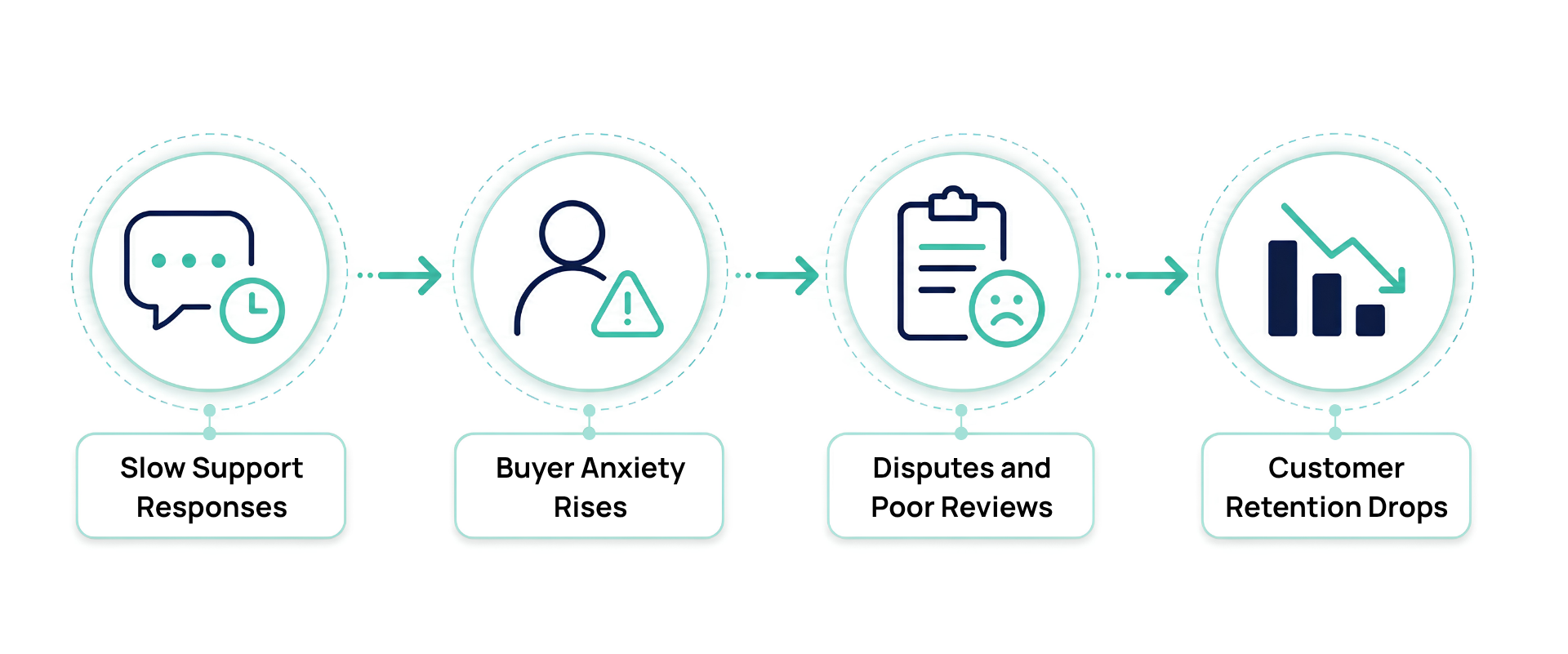
An Australian customer asking about a delayed parcel after local business hours, or a UK shopper contacting a brand during an evening promotion, may expect an answer before the onshore team is available again. Visa’s merchant guidance recommends keeping customers informed about delivery delays and notes that transaction or delivery timing can lead to preventable disputes.
How to Scale E-Commerce Operations and Campaign Execution
Running successful e-commerce operations requires consistent management of repetitive daily tasks. Too often, business owners expect their marketing directors to plan the strategy, write the copy, upload graphics, configure tracking, and schedule every post.
When strategic leaders spend most of their time on routine administration, they have less capacity to evaluate performance, develop campaigns, and make growth decisions.
A dedicated marketing operations team can handle the daily legwork:
- Ad Account Assistants: Monitor daily budgets, pull basic reports, organise creative assets, and check that new ads are uploaded correctly.
- Email Marketing Specialists: Build, schedule, and test newsletters, promotional campaigns, and automated customer retention flows.
- Social Media Coordinators: Manage publishing calendars, schedule content, and respond to comments from the online community.
How Do You Reduce Supply Chain and Data Entry Errors in E-Commerce?
The invisible backbone of a successful online store is data accuracy. Keeping track of inventory, updating product listings, communicating with suppliers, and managing routine bookkeeping
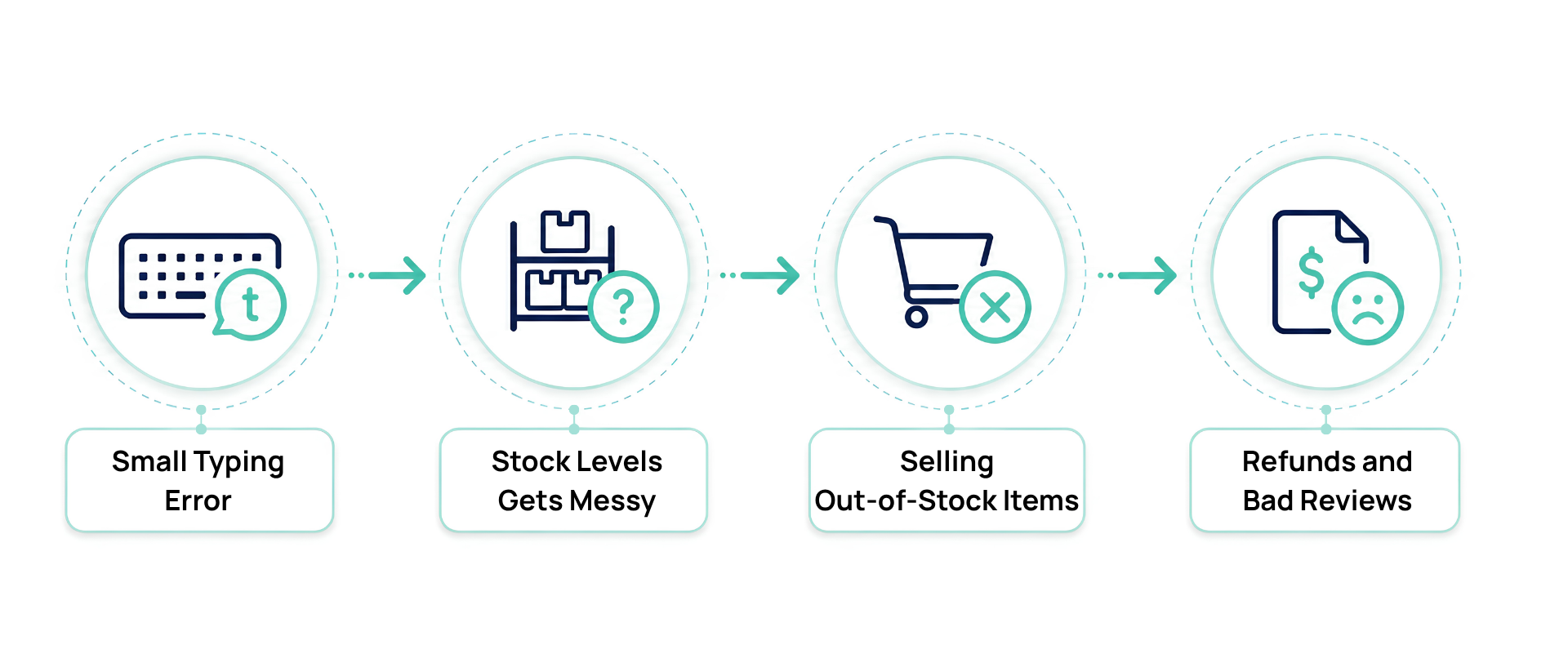
According to a report by AU post, Retailers in Australia often manage multiple sales channels and fulfillment locations. This complexity increases the risk of data entry errors which can lead to:
- Overselling and forced refunds
- Wasted advertising spend
- Unnecessary supplier friction
By partnering with dedicated offshore specialists to manage product updates and inventory tracking, you ensure accuracy and operational stability during high-volume sales periods.
What Is the Most Effective Global E-Commerce Staffing Model?
Managed offshoring is practical option for online businesses that need reliable daily support. It gives you the lower costs of hiring abroad, but with the help of a partner to handle hiring, HR, and office space.
Freelancers are useful for specialist or project-based work. However, long term growth needs sustainable E-Commerce scaling strategies executed by reliable teams, not just several temporary freelancers.
At the other end of the spectrum, building a traditional local operations team will require significant spending on recruitment, office space, payroll costs, and management infrastructure.
For scaling brands, the practical middle ground is a managed offshoring model. The business maintains direct oversight of brand workflows, priorities, and KPIs, while a dedicated partner manages the local employment and operational infrastructure.
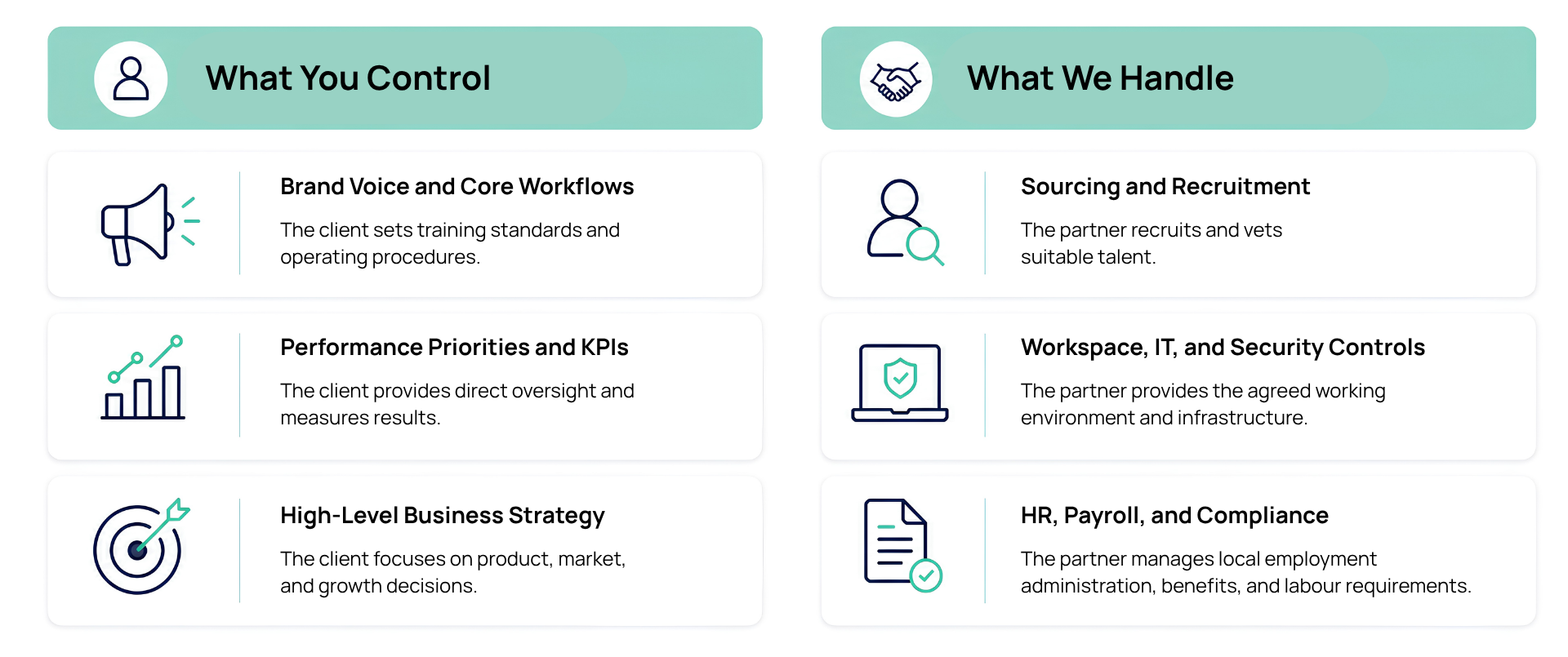
Businesses reduce staffing and operational costs through managed offshoring while improving execution consistency.
Operational Benefit: Managed offshoring will help onshore leaders regain valuable time for strategic priorities.
How Do You Hire Offshore E-Commerce Staff to Scale Your Brand Efficiently?
To hire a remote team the right way, look at your workload, separate the planning from the daily tasks, and find a partner you can trust
Break the hiring process into three practical steps:
- Identify Your Challenges: Review where local staff lose time to repetitive tasks, including customer service queues, inventory updates, reporting, or creative asset uploads.
- Separate Strategy From Execution: Keep the core local team focused on product development, brand direction, and growth strategy. Assign repeatable execution work to trained remote specialists.
- Establish an Integration Plan: Give the offshore team access to the required communication tools, standard operating procedures, brand guidelines, training, escalation paths, and performance measures from day one.
This structure keeps the onshore team focused on high-value decisions while a dedicated team manages essential daily operations reliably.
Which E-Commerce Roles Can E-commerce Businesses Offshore?
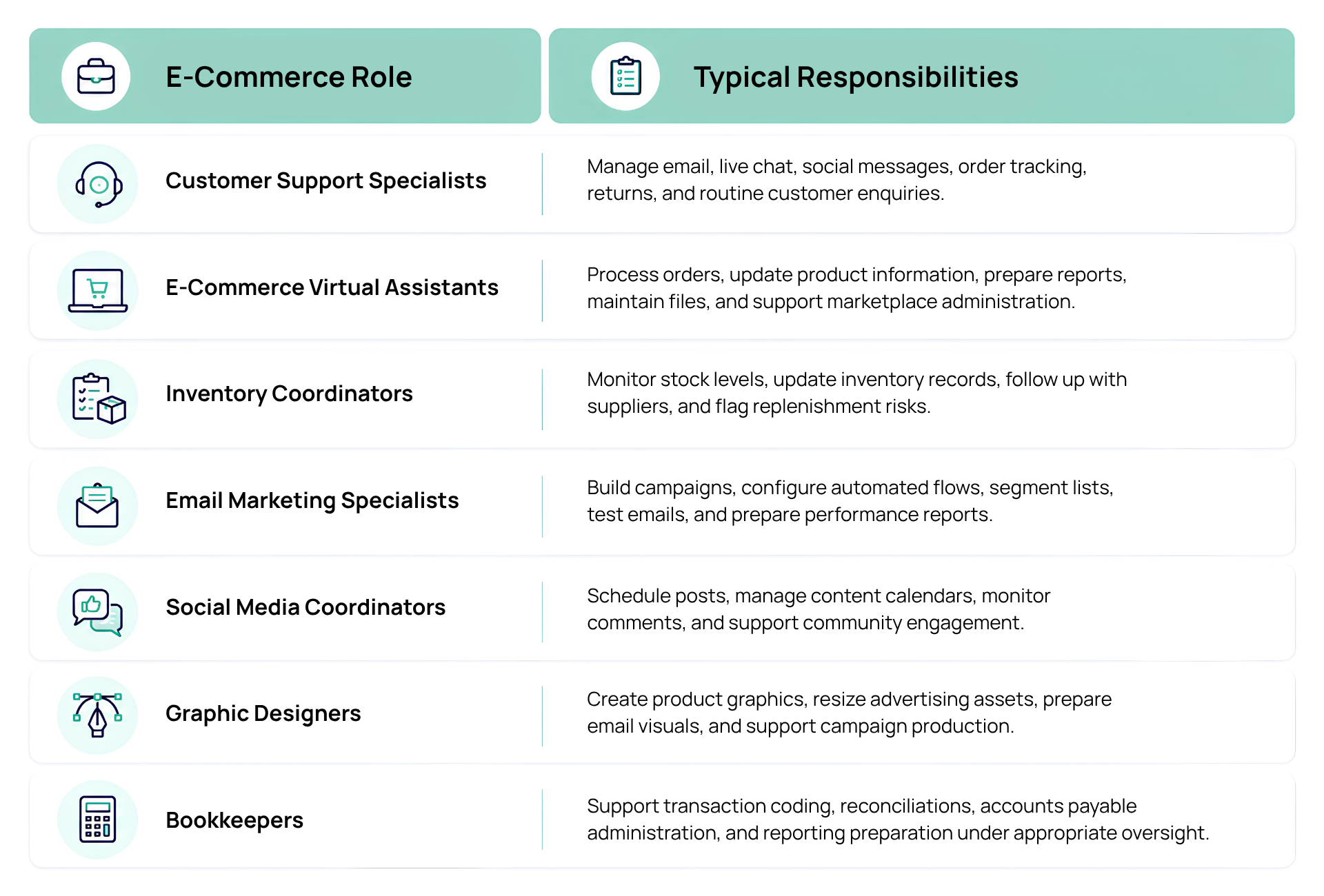
A job doesn’t have to be simple to be done remotely. It just needs clear instructions, the right access to your tools, and a good manager.
Scale the Backend Before Growth Creates Friction
More orders improve profitability only when customer support, fulfilment, marketing execution, inventory management, and administration can scale with them.
The goal isn’t just to save money on staff. It’s to build a team you can rely on to take care of your customers, giving your leaders more time to think about the future of the brand.
Instead of navigating the administrative and legal requirements of offshore hiring alone, Deployed provides the structure needed to build a dedicated, high-performing team with greater control over workflows, quality, and culture. The first step to sustainable growth is to [build an offshore e-commerce team] that integrates with your current workflows.
Is your team spending too much time on daily E-Commerce tasks?
Talk to a managed offshoring expert today about building an offshore team that can support your operations and help you grow.
About the Author
Angela McDonald is the CEO of Deployed, a managed offshoring partner specialising in building high-performing, dedicated remote teams in the Philippines. With a focus on sustainable growth and operational excellence, Angela helps businesses navigate global scaling, retain greater control over brand culture, and reduce operational overhead.

Why US Companies Are Building Outsourced Teams in the Philippines
Building a remote team through outsourcing to the Philippines scales your company’s ca...

What Roles Can You Outsource to the Philippines?
When deciding which roles outsource to the Philippines, the most suitable options are ...

Top 7 E-Commerce Roles You Can Outsource for Rapid Growth
Outsourcing the right e-commerce roles can help your business scale faster without ove...